CDL New Law Could Impact Truck Accident Cases in 2025

A major shift in trucking safety rules

A sweeping change in trucking safety is coming, and it could reshape how truck accident cases are handled in New Jersey and New York. The U.S. Department of Transportation (DOT) and the Federal Motor Carrier Safety Administration (FMCSA) have announced an emergency CDL law restricting who can hold a commercial driver’s license (CDL) if they are not U.S. citizens or permanent residents.

The rule follows a federal audit and several deadly crashes that exposed major licensing failures in multiple states.

For anyone hurt in a truck crash, this isn’t just a policy update. It’s new legal ground that can affect fault, insurance payouts, and the strength of a personal injury claim.


What changed in the CDL new law


The emergency rule, effective September 29, 2025, forces states to pause issuing “non-domiciled” CDLs—licenses for foreign nationals—until they comply with new federal standards.


Under the new requirements, drivers must:


  1. Present an unexpired foreign passport and Form I-94 tied to approved visas (H-2A, H-2B, or E-2).
  2. Pass a mandatory immigration status check through the Department of Homeland Security’s SAVE system.
  3. Renew their CDL in person every year under stricter recordkeeping rules.


Previously, many drivers qualified with only outdated paperwork or temporary employment cards. That leniency allowed unqualified drivers to operate heavy commercial trucks nationwide.


According to FMCSA, these failures have already been linked to multiple fatal crashes. In one case, a truck driver without legal work status caused a deadly U-turn crash in Florida. In Texas, another unqualified driver was involved in a collision that killed five people.


Impact on those injured in truck crashes


For victims of truck accidents in New Jersey and New York, the new law could make proving fault more straightforward:


  1. Driver negligence – If a driver should not have been licensed under the new rule, that failure strengthens negligence claims.
  2. Company responsibility – Employers must place safe, legally qualified drivers on the road. Ignoring this duty exposes them to liability.
  3. Insurance negotiations – Licensing gaps make it harder for insurers to deny or reduce payouts, giving victims leverage for stronger settlements.
  4. Comparative negligence laws – In New Jersey and New York, clear violations by the trucking side can help prevent reductions in victim compensation.


Impact on commercial drivers


For drivers, the stakes are higher. A CDL now requires strict compliance with immigration and work authorization rules. Failing to maintain proper documentation could mean suspension—and if a crash happens, victims may argue the driver was never legally qualified.


Trucking companies must also dig deeper. Employers are expected to run more thorough checks on immigration status, work permits, and license renewals before putting drivers behind the wheel. Non-compliance could expose companies to lawsuits and larger verdicts.


Injured in a truck crash? Contact John Onal


The CDL new law is changing the rules of the road. For victims, it could shape how fault and compensation are decided after a crash.


At John Onal Personal Injury Lawyers, we follow regulatory changes closely and know how to use them to build stronger cases. If you or a loved one has been hurt in a truck accident in New Jersey or New York, call us today for a free consultation. We’ll review your case, investigate compliance with the CDL rule, and fight for the compensation you deserve.


A two-story building engulfed in bright orange flames and thick smoke at night.
By john onal April 1, 2026
Choosing a catastrophic injury lawyer in New Jersey? Learn what experience, trial readiness, and resources matter most for maximizing compensation in serious injury cases.
Shards of broken glass lie scattered on a dark city street, with blurred buildings in the background.
By john onal April 1, 2026
Uninsured motorist coverage in New Jersey may pay after a hit and run—learn how UM claims work, what they cover, and how to recover compensation.
A person stands under a streetlight at night during a snowfall, with a parked car visible in the background.
By john onal April 1, 2026
Knowing what to do after a hit and run accident in New Jersey may protect both your health and your ability to recover compensation through an insurance claim or lawsuit. The driver is gone. The scene is chaotic. And the steps you take in the next hours and days matter more than they would in a standard accident where both parties stayed and exchanged information. But a missing driver does not mean a lost hit and run claim. Compensation may still be available through uninsured motorist coverage, PIP benefits, or a civil lawsuit if the driver is later identified. Speaking with a New Jersey hit and run accident lawyer may help clarify your options early in the process.
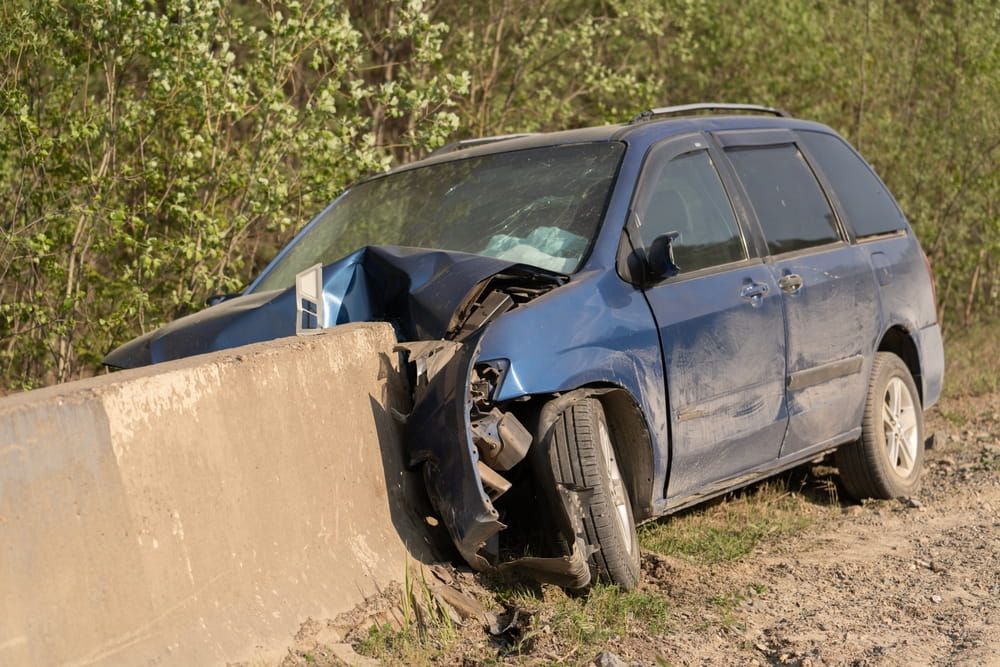
Severely damaged SUV crashed into a concrete barrier on the side of a road
By john onal April 1, 2026
Learn about common catastrophic injury types in New Jersey, including TBIs, spinal cord injuries and burns, and their impact on compensation.
An aerial view of a person crossing a dark city street on a white-striped crosswalk as a red car waits nearby.
By john onal April 1, 2026
Hit by a car in New Jersey? Learn what to do next, your legal rights, who pays medical bills, and how to protect your claim after a pedestrian accident.
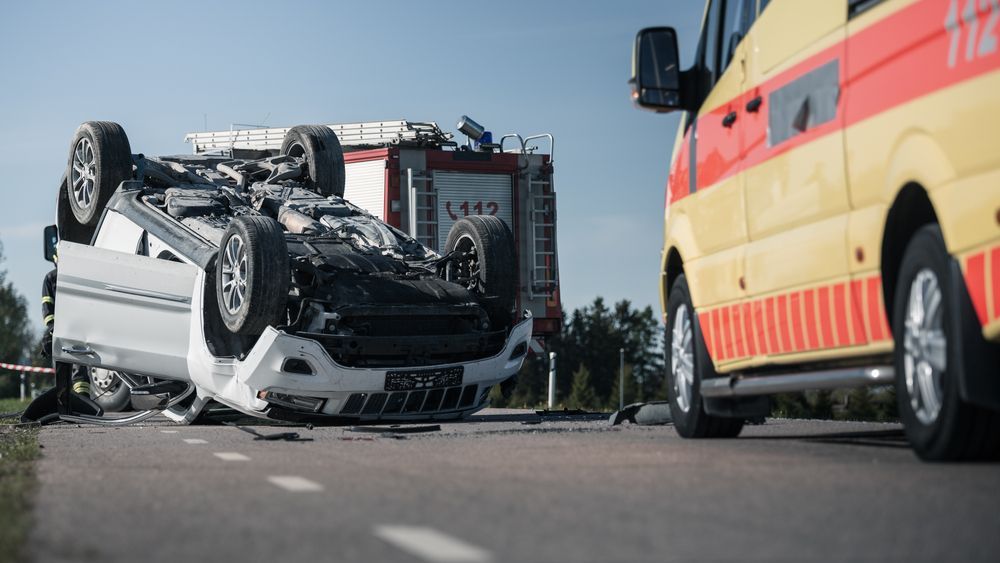
Overturned vehicle on a highway with emergency responders at the scene of a serious accident
By john onal April 1, 2026
Learn how catastrophic injury compensation is calculated in New Jersey, including future medical costs, lost earning capacity, and long-term damages.
The long, dark shadow of a latticed steel tower cast across a white-striped pedestrian crosswalk on asphalt.
By john onal April 1, 2026
Pedestrian accident hotspots in New Jersey: learn where crashes happen most, key risk factors, safety tips, and your legal rights after being hit by a car.
Person holding their knee after tripping and falling on an uneven stone sidewalk
By john onal March 31, 2026
Wet floors, ice, poor lighting, and broken stairs are common slip and fall hazards in New Jersey. Learn how each affects your premises liability claim.
A cyclist in a yellow jersey rides a blue bike on a city sidewalk past a row of parked cars on a sunny day.
By john onal March 31, 2026
Learn your rights after a bicycle accident in New Jersey, including compensation options, insurance coverage, and how to protect your claim.
A cyclist waits at a crosswalk with an ambulance and car approaching in the background.
By john onal March 31, 2026
Learn the most common causes of bicycle accidents in New Jersey, how driver negligence leads to crashes, and what it means for determining fault.
By john onal March 31, 2026
Learn what evidence you need to prove a slip and fall case in New Jersey, from notice and causation to surveillance footage and witness statements.
A professional in a suit writes at a desk beside a brass scales of justice and a gold desk lamp.
By john onal March 31, 2026
An NJ hit-and-run car accident can cause injuries, vehicle damage, and no information about the driver who caused it. The other vehicle is gone. There is no license plate, no insurance card, and no one to hold accountable at the scene.