Common Causes of Bicycle Accidents in New Jersey
The common causes of bicycle accidents in New Jersey often trace back to driver behavior, not cyclist error. Failure to yield, unsafe passing, distracted driving, and dooring account for many of the collisions that leave cyclists with serious injuries on New Jersey roads. Understanding what caused a crash is the first step toward determining whether someone else may be legally responsible.
New Jersey law treats bicycles as vehicles. Cyclists have the same rights and responsibilities as motor vehicle drivers. When a driver violates those rights, the resulting crash may give rise to a legal claim.
Speaking with a
New Jersey bicycle accident lawyer may help clarify whether you have a path to compensation.
Key Takeaways About Bicycle Accident Causes in New Jersey
- Most bicycle accidents in New Jersey involve a motor vehicle, and driver negligence is a leading factor in these collisions
- New Jersey's Safe Passing Law requires drivers to give cyclists at least four feet of space or slow to 25 mph, and a violation may serve as evidence of fault
- Intersection crashes, dooring accidents, and right-hook collisions each involve different liability factors that affect how fault is determined
- Potholes, debris, and poor road maintenance may support a claim against a government entity, though a 90-day notice of tort claim requirement applies
- New Jersey's comparative negligence rule allows an injured cyclist to recover compensation even if they were partly at fault, as long as their share does not exceed 50 percent
Failure to Yield and Bicycle Accidents in New Jersey
Failure to yield the right of way is the leading contributing factor in fatal bicycle crashes nationally, according to the National Highway Traffic Safety Administration. In New Jersey, this pattern plays out at intersections, driveways, and parking lot exits where drivers fail to check for approaching cyclists before turning or pulling into traffic.
A driver who turns left across a cyclist's path, pulls out of a side street without looking, or rolls through a stop sign may bear fault for the resulting collision. These crashes happen quickly and often at speeds that leave the cyclist with little time to react.
Left-Turn and Right-Hook Bicycle Accidents
Left-turn accidents occur when an oncoming driver turns across the cyclist's lane of travel. The driver may misjudge the cyclist's speed or simply fail to see them. Right-turn collisions follow a similar pattern: a driver cuts across a bike lane or the cyclist's path of travel to make the turn.
Both scenarios may involve violations of New Jersey traffic laws governing right-of-way, which strengthens the cyclist's claim.
Unsafe Passing and New Jersey’s Safe Passing Law
New Jersey's Safe Passing Law took effect on March 1, 2022 and requires motorists to use due caution when passing vulnerable road users, including cyclists. Drivers must change lanes when possible. On single-lane roads, they must leave at least four feet of space, or slow to 25 mph and prepare to stop if four feet is not available.
Despite the law, unsafe passing remains a common cause of bicycle accidents in New Jersey. Drivers may squeeze past a cyclist on a narrow road, misjudge the distance between their mirror and the cyclist's handlebars, or accelerate past without leaving adequate space.
A violation of the safe passing law may serve as direct evidence of negligence in a bicycle accident claim.
Why Is Distracted Driving So Dangerous for Cyclists?
A driver looking at a phone, adjusting a GPS, or reaching for something in the passenger seat may not see a cyclist until it is too late. Distracted driving reduces reaction time and narrows a driver's field of vision, both of which are critical when sharing the road with cyclists.
New Jersey prohibits the use of handheld electronic devices while driving under N.J.S.A. 39:4-97.3. A citation for distracted driving at or near the time of a bicycle collision may support a negligence claim.
Why Distracted Driving Is Especially Dangerous for Cyclists
Cyclists are smaller and quieter than motor vehicles. A momentary lapse in attention that might cause a minor fender-bender between two cars may cause catastrophic injuries when the other party is on a bicycle. Common driver distractions that contribute to bicycle accidents include the following behaviors:
- Texting or scrolling on a phone: Even a few seconds of looking down removes a driver's eyes from the road long enough to miss an approaching cyclist entirely.
- Programming a GPS or adjusting controls: Reaching for a touchscreen, climate controls, or a stereo diverts both visual and manual attention from driving.
- Eating or drinking behind the wheel: One hand off the wheel and eyes off the road reduces a driver's ability to react to a cyclist in their path.
- Talking to passengers or turning toward the back seat: Drivers who shift their visual focus inside the vehicle may drift into a bike lane or miss a cyclist at an intersection.
The lack of structural protection around a cyclist means even low-speed impacts may cause broken bones, head injuries, or worse.
Bicycle Accidents at Intersections in New Jersey
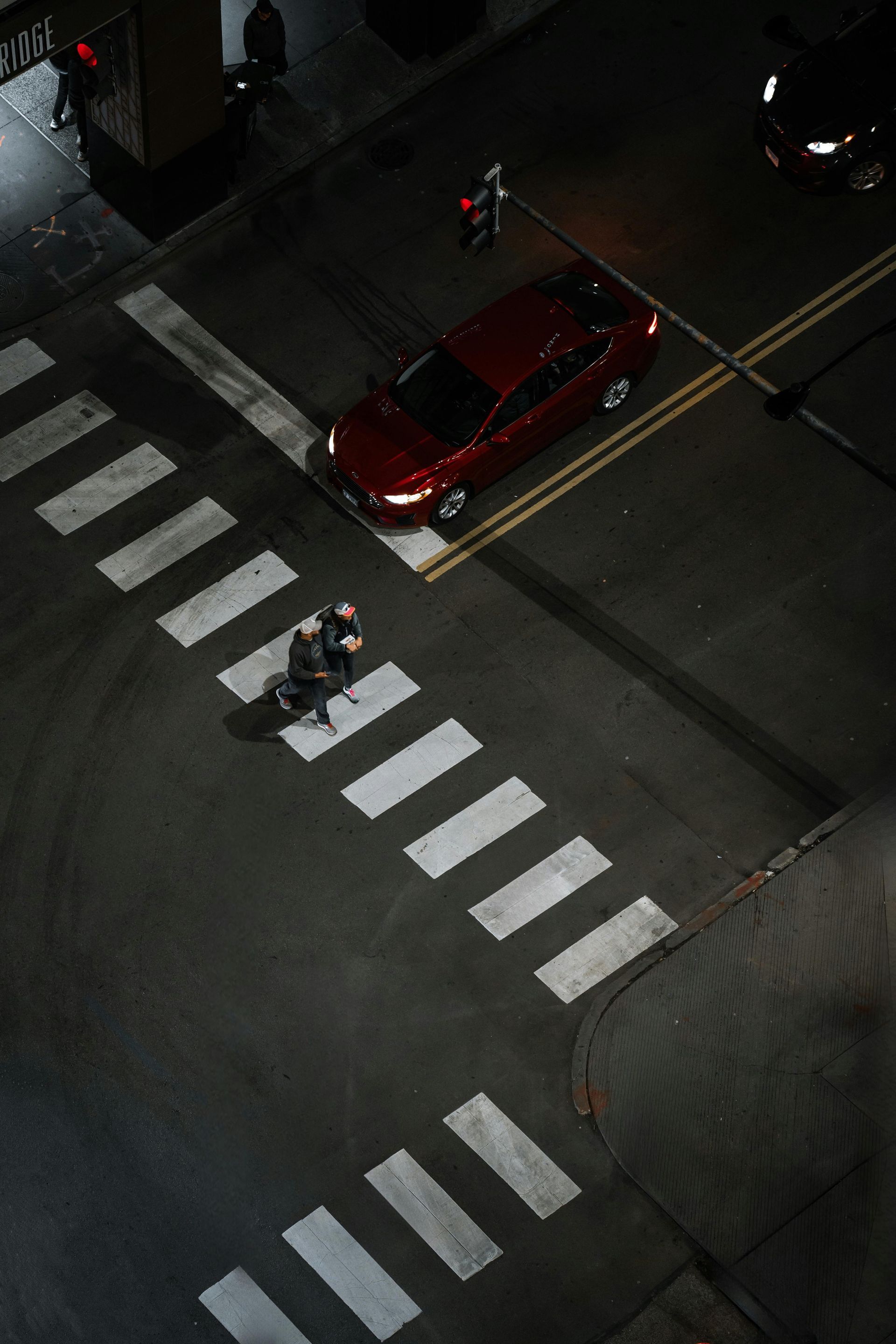
Nationally, roughly 29 percent of cyclist fatalities occur at intersections. In New Jersey, busy urban intersections with multiple turning lanes, limited visibility, and heavy traffic create conditions where bicycle-vehicle collisions are more likely.
Typical Causes of Bicycle Accidents at Intersections
Intersection crashes follow several common patterns, each involving different liability considerations:
- Right-hook accidents: A driver passes a cyclist and then turns right directly across the bike lane or the cyclist's path of travel, cutting off the rider mid-intersection.
- Left-cross collisions: An oncoming driver turns left across the cyclist's lane, often misjudging the cyclist's speed or failing to see them altogether.
- Running red lights or stop signs: A driver enters the intersection while the cyclist has the right of way, leaving little time for either party to react.
- Rolling stops at stop signs: A driver slows but does not fully stop, pulling into the intersection just as a cyclist enters from the cross street.
Traffic signal timing, intersection design, and the presence or absence of dedicated cycling infrastructure all affect both the likelihood of a crash and the question of fault afterward.
How Driveways and Parking Lots Cause Bicycle Accidents
Not all intersection-style crashes happen at traditional intersections. Driveways and parking lot exits create similar collision patterns on a smaller scale. A driver backing out of a driveway or pulling out of a parking lot may fail to check for a cyclist on the sidewalk or roadway. These crashes often occur in residential neighborhoods and commercial areas where cyclists and vehicles cross paths frequently.
Liability in these situations typically falls on the driver, who has a duty to yield to traffic, including cyclists, before entering the roadway.
Unsafe Road Conditions and Bicycle Crash Claims
Not every bicycle accident involves another vehicle. Hazardous road conditions may cause a cyclist to lose control and crash, especially at higher speeds or in low-light conditions. Common road hazards that lead to bicycle accidents in New Jersey include the following:
- Potholes: Deep or uneven pavement may catch a bicycle tire and throw the rider from the bike, particularly on roads without adequate lighting.
- Cracked or uneven pavement: Raised edges, buckled asphalt, and broken concrete create unpredictable surfaces that affect bicycle handling and stability.
- Loose gravel and sand: Gravel scattered across travel lanes or bike lanes reduces tire traction and may cause a cyclist to slide, especially during turns.
- Metal drainage grates: Grates with slots that run parallel to the direction of travel may catch a narrow bicycle tire, stopping the bike suddenly and ejecting the rider.
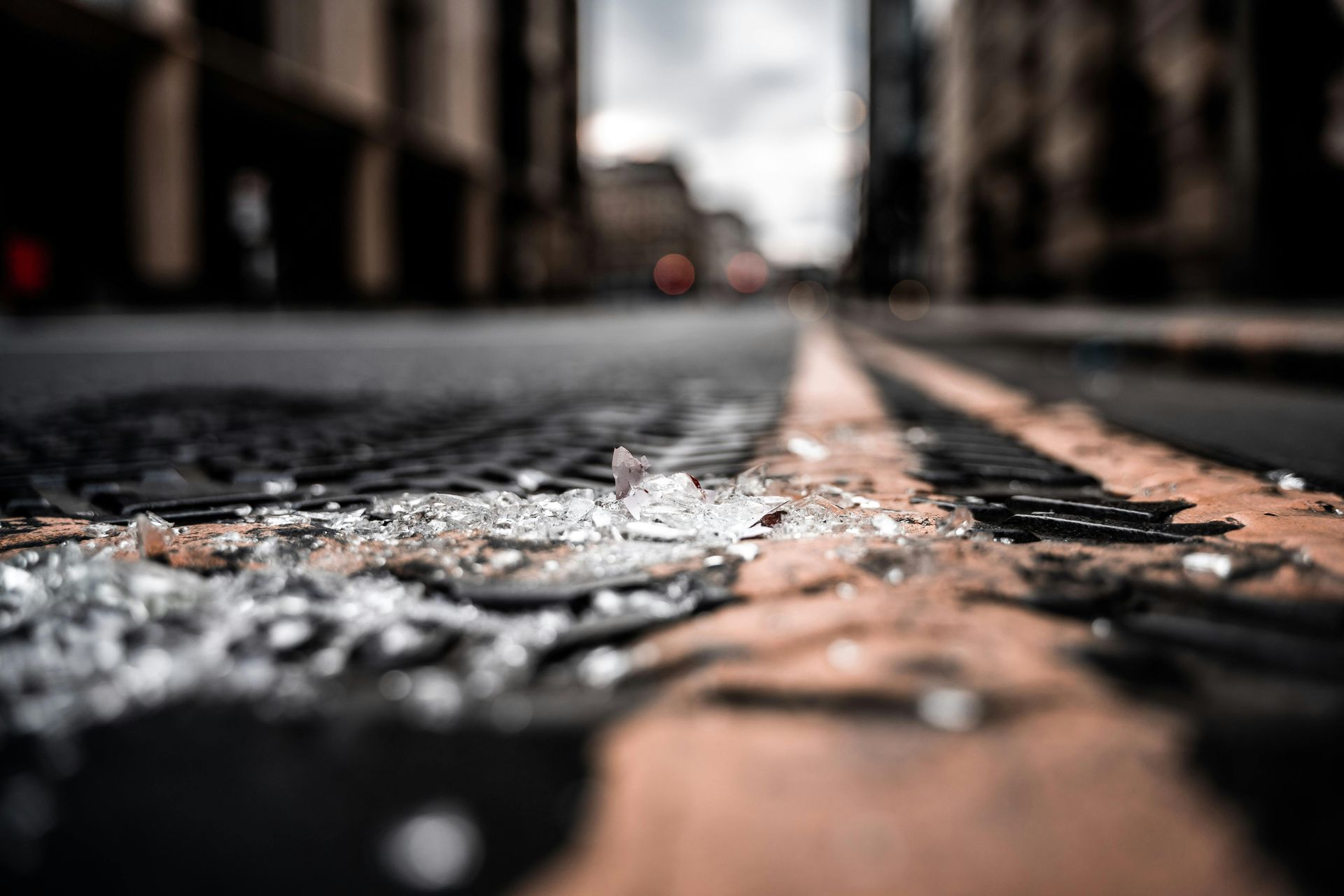
- Debris in bike lanes: Broken glass, fallen branches, construction materials, and litter force cyclists to swerve into traffic or risk a crash.
When poor road maintenance contributes to a bicycle accident in New Jersey, the responsible government entity may bear liability. Municipal, county, and state agencies all have obligations to maintain safe road conditions. However, claims against government entities follow different procedural rules.
New Jersey’s 90-Day Notice Rule for Government Claims
In New Jersey, a cyclist injured by a road defect usually must file a notice of tort claim within 90 days of the accident. This deadline is significantly shorter than the standard two-year statute of limitations for personal injury claims. Missing the 90-day window may permanently bar the claim, regardless of how clear the evidence of poor maintenance may be.
Low-Light and Weather Conditions That Contribute to Bicycle Crashes
More than half of cyclist fatalities nationally occur in dark, dawn, or dusk conditions. New Jersey's dense urban corridors, narrow streets, and high traffic volume compound the risks of riding in low-light conditions.
New Jersey law requires cyclists to equip their bicycles with a white front headlamp and a red rear lamp, both visible from at least 500 feet, when riding after dark (N.J.S.A. 39:4-10). Even with proper lighting, cyclists remain difficult to see in rain, fog, or on poorly lit streets.
Drivers have a heightened duty of care in reduced-visibility conditions. A failure to adjust speed, use headlights properly, or watch for vulnerable road users may constitute negligence when a crash results.
Who Is at Fault After a Bicycle Accident in New Jersey?
New Jersey follows a modified comparative negligence system under N.J.S.A. 2A:15-5.1. Fault is assigned by percentage to each party involved in the accident. An injured cyclist may recover compensation as long as their share of fault does not exceed 50 percent. Any award is reduced by the cyclist's percentage of responsibility.
Insurance companies might try to shift blame toward the cyclist. Common arguments include that the cyclist was riding outside a bike lane, failed to signal, or was not wearing a helmet. An attorney familiar with New Jersey bicycle laws may counter these arguments with evidence of the driver's own violations.
Why Does Speeding Lead to More Severe Bicycle Injuries?
Speed affects both the likelihood and severity of a bicycle crash. A driver traveling above the posted limit has less time to react to a cyclist and less distance in which to stop. The physics are straightforward: the faster the vehicle, the greater the force of impact.
Research from NHTSA shows that fatal pedestrian and bicycle crashes are more likely to occur on roads with higher posted speed limits. In New Jersey, this is relevant on state highways, county roads, and multi-lane urban streets where posted speeds may exceed what is safe for mixed bicycle and vehicle traffic.
What to Do After a Bicycle Crash in New Jersey
The steps a cyclist takes after a crash may directly affect the strength of a future claim. Key actions that help protect both health and legal rights include the following:
- Seek medical attention: Even injuries that feel minor at first may worsen over time, so if you haven’t already, see a doctor. A medical evaluation creates documentation that links injuries directly to the accident.
- Preserve damaged equipment: A crushed helmet, bent bicycle frame, or torn clothing may serve as physical evidence of the force involved in the collision.
- Avoid giving recorded statements to insurance companies: Insurance adjusters may contact you shortly after the accident. Anything you say in a recorded statement may be used to reduce or deny your claim.\
- Keep all documents and records organized: Medical bills, police reports, repair estimates, pay stubs showing missed work, and correspondence from insurance companies all support the value of a claim.
- Speak with a New Jersey bicycle accident attorney: An attorney may help identify who was at fault, determine what insurance coverage applies, and protect your claim from early mistakes that are difficult to undo later.
Acting early matters. Surveillance footage can be overwritten, witness memories fade, and physical evidence at the scene deteriorates. Speaking with a bike accident lawyer soon after the crash helps protect both your legal rights and the quality of the evidence.
When You Know What Caused the Crash, the Next Step Becomes Clearer
A bicycle accident may feel like random bad luck in the moment. The reality is often different. Most serious crashes trace back to a specific act of negligence, a driver who did not look, did not yield, or did not leave enough space.
Identifying the cause is what transforms a painful experience into a claim with a clear path forward. If a driver's actions caused your bicycle accident in New Jersey, speaking with an attorney may help clarify your options and protect your right to pursue compensation. Call Onal Injury Law today for a free consultation.
FAQs About Bicycle Accidents and Liability in New Jersey
Are most bicycle accidents in New Jersey caused by drivers?
The majority of serious bicycle crashes involve a motor vehicle, and driver negligence is a leading contributing factor. Failure to yield, unsafe passing, and distracted driving are among the most common driver behaviors that lead to collisions with cyclists.
Does New Jersey have a law against dooring cyclists?
New Jersey does not have a specific anti-dooring statute. However, the person who opened the door may still be held liable under general negligence principles if they failed to check for approaching cyclists.
What happens if a pothole caused my bicycle accident?
A claim against a government entity for poor road maintenance is possible, but it usually requires a notice of tort claim within 90 days of the accident. An attorney may help determine which agency is responsible and meet the filing deadline.
Does the Safe Passing Law apply on roads without bike lanes?
The Safe Passing Law applies on all New Jersey roads, whether or not a bike lane is present. Drivers must give cyclists at least four feet of space or slow to 25 mph and prepare to stop if that distance is not possible.
Who is liable if a cyclist is hit at an intersection in New Jersey?
Liability depends on the specific circumstances, including traffic signals, right-of-way rules, and each party's actions before the crash. A driver who ran a red light or failed to yield while turning would likely bear the majority of fault.