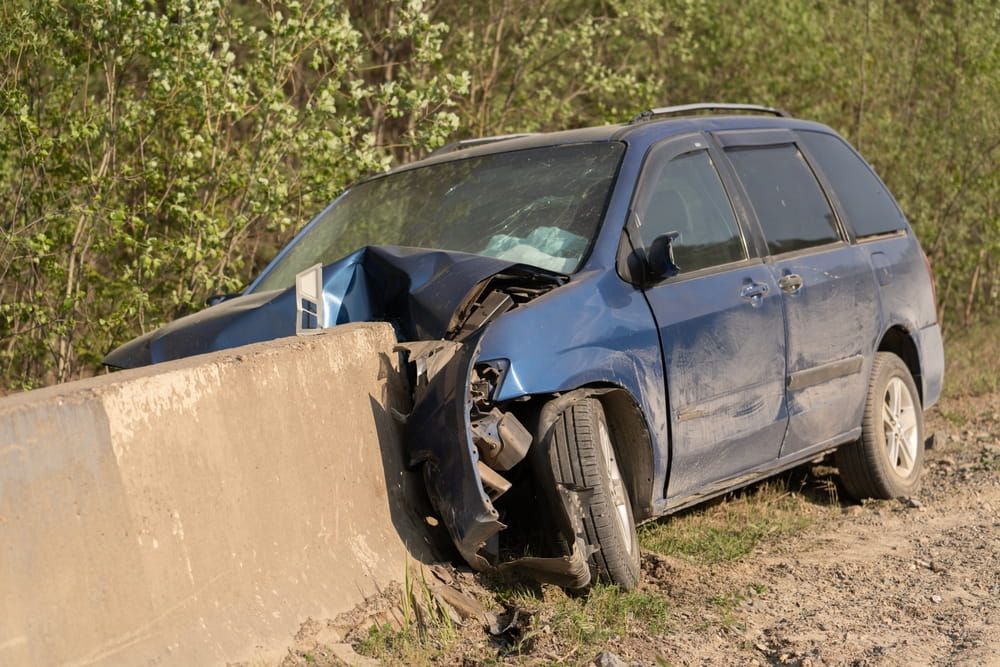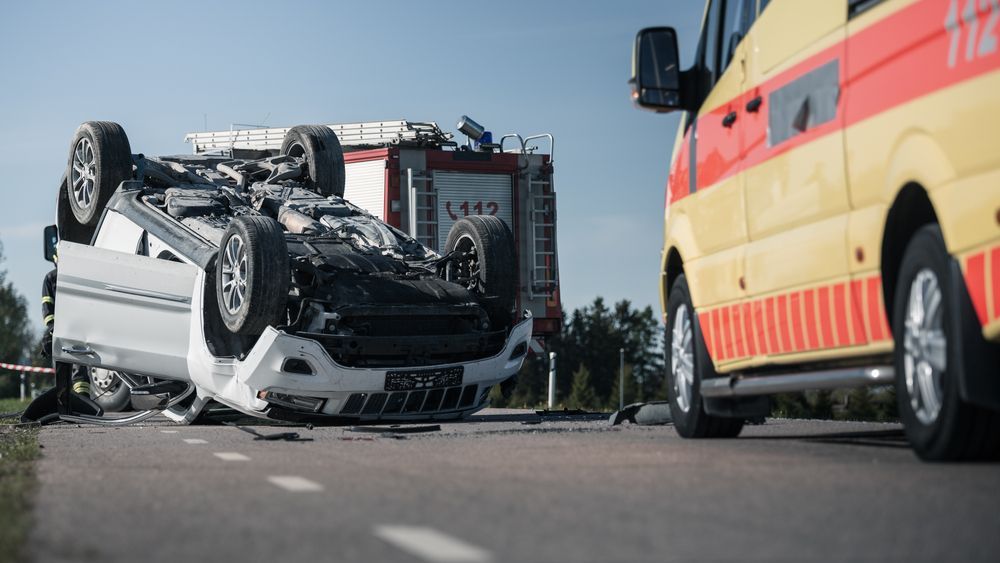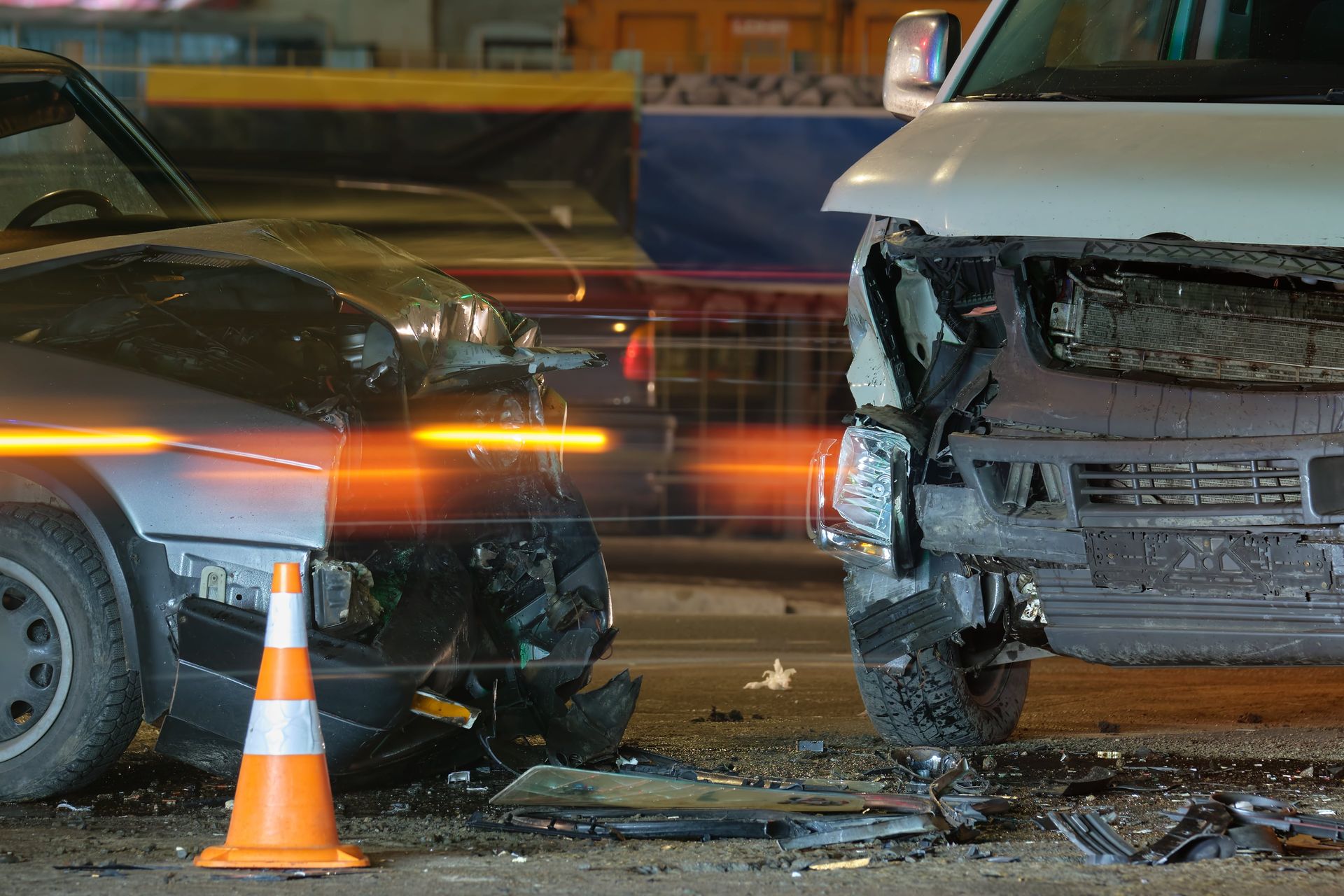
An NJ hit-and-run car accident can cause injuries, vehicle damage, and no information about the driver who caused it. The other vehicle is gone. There is no license plate, no insurance card, and no one to hold accountable at the scene.
In these situations, some may assume that means there is no path to compensation, but New Jersey law provides multiple avenues for recovery, even when the at-fault driver is never identified.
Instead of filing against the other driver's liability insurer, recovery after a hit and run often depends on your own insurance policy, specifically your uninsured motorist (UM) coverage, your PIP benefits, and in some cases, the Unsatisfied Claim and Judgment Fund. Our New Jersey car accident lawyers can help you navigate these complex claims.
Key Takeaways for NJ Hit and Run Car Accident Claims
- New Jersey treats a hit-and-run vehicle as an "uninsured motor vehicle" under N.J.S.A. 17:28-1.1, which may trigger your own UM coverage
- PIP benefits pay for medical expenses and a portion of lost income, regardless of who caused the accident or whether the other driver is identified
- Phantom vehicle accidents, where the at-fault driver causes a crash without making physical contact, face additional evidentiary hurdles that require early documentation and independent corroboration
- Filing a police report promptly and making reasonable efforts to identify the other driver are often required under UM policy terms and may be critical to pursuing an unidentified driver claim
- The two-year statute of limitations generally applies to a lawsuit against the at-fault driver, but UM claims against your own insurer often follow different time limits (and your policy may require much faster notice)
What Qualifies as a Hit and Run Under New Jersey Law?
Under N.J.S.A. 39:4-129 , every driver involved in a collision resulting in injury, death, or property damage must stop at the scene. The driver must exchange information with the other parties, render reasonable assistance to anyone who is injured, and report the accident to law enforcement. A hit and run occurs when a driver fails to fulfill these obligations.
From the victim's perspective, the legal definition matters because New Jersey classifies hit-and-run vehicles as uninsured motor vehicles. A hit and run vehicle is defined under N.J.S.A. 39:6-78 as one where the identity of the motor vehicle and of the operator and owner cannot be determined, or where the vehicle was in the possession of someone other than the owner without consent, and that person's identity cannot be established.
That statutory classification opens the door to recovery through your own UM policy.
What About a Phantom Vehicle Accident?
Not every hit and run involves physical contact between vehicles. A phantom vehicle accident occurs when an unidentified driver causes a crash without ever touching your car. A common example: a vehicle swerves into your lane on the Turnpike, forcing you to brake suddenly or veer off the road. The other driver continues on. Your vehicle strikes a guardrail or another car, but the vehicle that caused the chain of events is gone.
New Jersey law recognizes that a hit-and-run vehicle does not need to make physical contact with the claimant or the claimant's vehicle in order for the injured person to collect uninsured motorist benefits. However, phantom vehicle claims carry a higher evidentiary burden than contact-based hit and runs, which is addressed in detail below.
How UM Coverage Becomes Your Primary Path to Recovery
When the at-fault driver disappears, your own auto insurance policy becomes the primary source of compensation for injuries and losses beyond what PIP covers. Uninsured motorist coverage is first-party coverage that provides compensation to an insured under their own automobile policy for personal injury and other losses caused by an uninsured tortfeasor.
How Much UM Coverage Does New Jersey Require?
New Jersey requires minimum UM coverage limits that have increased in recent years under N.J.S.A. 17:28-1.1 , and for many policies issued or renewed on or after January 1, 2026, the minimum is $35,000 per person and $70,000 per accident. Insurers may not limit coverage to the statutory minimum and are required to offer additional UM coverage up to $250,000 per person or $500,000 per accident for bodily injury.
Two exceptions apply. Drivers who carry a basic auto policy under N.J.S.A. 39:6A-3.1 , or a special policy under N.J.S.A. 39:6A-3.3 , may not have UM coverage at all. For those drivers, alternate paths such as the Unsatisfied Claim and Judgment Fund may be available.
How PIP and UM Coverage Work Together After a Hit and Run
PIP coverage activates immediately after any auto accident, regardless of fault. It pays for medical expenses, a portion of lost income, and essential services you may not be able to perform during recovery. PIP is your first layer of coverage, and it applies whether the other driver is identified or not.
UM coverage addresses a different category of losses. While PIP handles immediate medical and economic costs, UM may cover damages that PIP does not reach, including pain and suffering (subject to your tort threshold selection), lost earning capacity beyond PIP limits, and other non-economic losses.
Identifying where PIP ends, and UM begins is one of the first steps an attorney takes when evaluating an NJ hit and run car accident claim. Our car accident lawyer team can help you understand these coverages.
What "Reasonable Efforts" Must You Demonstrate After an NJ Hit and Run?
In order to assert a UM claim based on an accident caused by a hit and run driver, the claimant must demonstrate that they made reasonable efforts to determine the identity of the vehicle, its owner, and its operator. This standard comes from the Appellate Division's decision in Scheckel v. State Farm Mutual (1998).
Reasonable efforts may include:
- Calling local law enforcement immediately after the accident and providing every detail you recall about the fleeing vehicle, including color, make, model, direction of travel, and any partial plate information
- Asking witnesses at the scene whether they observed the other vehicle or captured any photos or video
- Checking for nearby surveillance cameras at businesses, traffic intersections, or residential doorbell systems
- Cooperating with the investigating officers and following up on the police report to confirm its accuracy and completeness
Filing the police report promptly is the foundation of this requirement. Insurance carriers scrutinize the timeline between the accident and the first report to law enforcement. A gap may give the insurer grounds to challenge the claim's credibility.
But the report alone may not satisfy the standard if other reasonable steps, like canvassing for witnesses or requesting nearby camera footage, were available and not taken.
The Corroboration Requirement for Phantom Vehicle Claims in NJ
Phantom vehicle claims present a distinct challenge. When there is no physical contact with the at-fault vehicle, the injured person faces a higher evidentiary burden than in contact-based hit-and-run cases.
Where the Corroboration Standard Comes From
Many UM policy endorsements historically required that the facts of a noncontact accident be corroborated by competent evidence other than the claimant's own testimony. Insurers argued this requirement reduced the potential for fraudulent claims.
The New Jersey Supreme Court rejected that position in Perez v. American Bankers Insurance Co. of Florida (1979). The court held that contractual corroboration clauses in noncontact hit and run cases are invalid because they conflict with the purposes of New Jersey's uninsured motorist statutes.
A phantom vehicle's existence does not need to be corroborated by independent evidence to establish a prima facie UM claim.
What This Means in Practice
The Perez ruling removed the contractual barrier, but it did not eliminate the practical need for supporting evidence. Insurance carriers still evaluate credibility. A phantom vehicle claim supported only by the injured person's account, with no witnesses, no physical evidence, and no police report, faces an uphill path in arbitration or at trial.
Independent evidence that may strengthen a phantom vehicle claim includes:
- Witness statements from other motorists, passengers, or pedestrians who observed the unidentified vehicle's conduct
- Dashcam or traffic camera footage showing the phantom vehicle's movements before the crash
- Physical evidence at the scene, such as skid marks, debris patterns, or damage consistent with an evasive maneuver
- Accident reconstruction analysis from a qualified professional who may link the physical evidence to a phantom vehicle scenario
The more independent sources supporting the claim, the stronger its foundation.
How Fault Allocation Works When a Phantom Vehicle Is Involved
New Jersey's Comparative Negligence Act, N.J.S.A. 2A:15-5.1 , requires juries to allocate fault among all parties who contributed to an accident. In Krzykalski v. Tindall (2018), the New Jersey Supreme Court held that phantom vehicles driven by known but unidentified motorists may presumptively be allocated fault.
This means if the phantom driver bears most of the responsibility but is never identified, the UM claim against your own insurer becomes the mechanism for recovering that share of the damages. If identified, the identified defendant pays only their proportional share.
What Types of Compensation May Be Available After an NJ Hit and Run Car Accident?
The compensation available after a hit and run depends on the coverage in your policy and the severity of your injuries.
PIP benefits cover immediate economic losses. Medical expenses, a portion of lost wages, and essential services are available under PIP regardless of who caused the accident. The limits of your PIP coverage determine how far these benefits extend.
UM benefits address losses that PIP does not cover. Depending on your tort threshold selection (verbal or zero threshold), UM may provide compensation for:
- Pain and suffering related to injuries that meet the statutory threshold requirements
- Future medical costs that exceed PIP limits
- Long-term diminished earning capacity
- Loss of enjoyment of life and other non-economic damages
If the at-fault driver is later identified and carries insurance, the claim may shift from a UM claim to a third-party liability claim against that driver's insurer. The two pathways are not always interchangeable, and the timing of identification may affect which coverage applies.
Common Mistakes That May Weaken an Unidentified Driver Claim
Several missteps may undermine a UM claim after a hit and run, regardless of how strong the underlying facts are.
Delaying the Police Report
Waiting too long to report the accident creates a credibility gap. Insurers question why an injured person delayed if the accident happened the way they describe. Filing the report as soon as safely possible protects the claim's foundation.
Missing the UM Notice Window
Most UM endorsements require timely notice of the accident and the intent to make a claim. The specific timeframe varies by policy, but delay invites denial. Notifying your own carrier promptly, even before knowing the full extent of your injuries, preserves the right to pursue UM benefits.
Leaving Evidence at the Scene
Photographs of vehicle damage, road conditions, skid marks, and debris help reconstruct what happened. If witnesses are present, collecting their contact information immediately preserves access to their accounts before memories fade. Evidence that is not documented at the scene may never be recovered. For more on this, contact our Paterson NJ personal injury lawyer for guidance.
Settling for PIP Without Evaluating UM Eligibility
PIP covers a defined category of economic losses. It does not address pain and suffering, long-term earning capacity losses, or other non-economic damages that UM may cover. Accepting a PIP-only resolution without a full review of available UM benefits may leave significant compensation unrecovered.
FAQs for NJ Hit and Run Car Accident Claims
What if I Only Got a Partial License Plate Number?
A partial plate may be enough for law enforcement to identify the vehicle, especially when combined with a description of the make, model, color, and direction of travel. Even if the plate leads to the vehicle, but the driver denies involvement, the investigation may produce evidence that connects the vehicle to the crash scene.
Does My UM Claim Go Through Arbitration or Court?
UM disputes in New Jersey are typically resolved through arbitration rather than a jury trial. The specific procedure depends on the terms of your UM endorsement. If required, arbitration follows the rules outlined in the policy and applicable case law. If the arbitration produces an unsatisfactory result, limited avenues for appeal may exist depending on the circumstances.
What if I Do Not Have UM Coverage on My Policy?
Drivers with a basic or special auto policy may not carry UM coverage. In those situations, the Unsatisfied Claim and Judgment Fund , administered through the state, may provide limited compensation for injuries caused by unidentified or uninsured drivers. The fund has specific eligibility requirements and caps on recovery. An experienced New Jersey personal injury lawyer can help you navigate this process.
How Long Do I Have to File a Claim After a Hit and Run in NJ?
Generally, the statute of limitations for personal injury claims in New Jersey is two years from the date of the accident. However, UM policy deadlines for providing notice to your insurer may be shorter. Missing either deadline may eliminate the ability to pursue compensation.
What if There Were Witnesses but They Did Not Stay at the Scene?
Witnesses who leave the scene may still be located through the police investigation. Officers often canvass the area, review surveillance footage, and follow up on leads. If a witness is identified later, their statement may still support the claim. Your attorney may also retain an investigator to locate witnesses who were present but did not provide information at the scene.
When the Other Driver Is Gone, Your Claim Can Still Move Forward
A hit and run takes away the certainty of knowing who caused the crash, but it does not take away the right to pursue compensation. New Jersey's UM framework exists precisely for this situation, providing a path to recovery through your own policy when the at-fault driver is unknown.
At Onal Injury Law, we approach hit and run cases with the same preparation and discipline that defines every case we accept. Our attorneys identify every applicable coverage source, build the evidentiary record from the first phone call, and prepare the claim as though it will be tested under cross-examination. Learn more about our New Jersey car accident lawyers and how we can assist you.